
News from the Network
![[Translate to english:] Wüste mit grünem Tal, durch das sich ein Fluss windet. Im Vordergrund Menschen, die im Gegensatz zur Landschaft winzig erscheinen](/fileadmin/_processed_/0/e/csm_Berliner_Erkl%C3%A4rung_Bild_cba6c95921.png)
Berlin Declaration: For the Future of Humankind
05/20/2022 · SGN, MfN and LIBThirty years after the first Earth Summit in Rio de Janeiro, biodiversity loss and global climate change are the greatest and most pressing challenges of the future. Nothing less than our very existence is at stake. Under the leadership of the three Leibniz Natural Research Museums, a broad alliance of renowned researchers calls on the German government in its “Berlin Declaration” published today to live up to the special responsibility of the G7 presidency in combating these “twin crises.” The Convention on Biological Diversity (CBD COP15), currently scheduled for the end of August, would offer the historic opportunity for an urgently needed trend reversal in favor of stronger climate and biodiversity protection. In their position paper, the researchers present concrete recommendations for action, with “nature- based solutions” as an essential key to success.
10 Must Knows from Biodiversity Science 2022
03/15/2022 · Leibniz BiodiversityThe “10 Must Knows from Biodiversity Science 2022”, which have now been published for the first time, range from climate stress for German forests and the restructuring of agriculture to the spread of the corona virus from animals to humans. 45 scientists from the Leibniz Research Network Biodiversity and colleagues compiled the inventory on the preservation of nature as the basis of human life. According to the researchers, the report is intended to encourage the dialogue in preparation to the UN Biodiversity Conference in Kunming, China. At the same time, they make concrete demands on politicians.
Dresden Nexus Conference 2022: Biodiversity - Stewardship for Vital Resources
01/12/2022 · IÖRThe DNC2022 focuses on strengthening biodiversity with other challenges in society (e.g., climate change, urban and regional development, agri-food and forest systems and circular economy). Under the theme “Biodiversity - stewardship for vital resources”, the fourth Dresden Nexus Conference (DNC) will take place on May 23–25 2022. The programme aims to explore research and practical examples of sustainable resource management in communities around the world and how these management strategies support the achievement of the SDGs. The Leibniz Biodiversity Network supports the event as a conference partner.

Snowglow and leafy trees in winter - How too much light affects biodiversity
12/16/2021 · IGBThe dark season has begun - but actually, due to the increase in artificial lighting, night and winter are no longer so dark. Researchers call this problem light pollution. More and more scientific studies show that light pollution is a serious threat to all levels of biodiversity - from genes to ecosystems. Researchers from the Leibniz Institute of Freshwater Ecology and Inland Fisheries (IGB) investigate the issue and provide an overview. In addition, as part of an international team, they have identified 11 urgent research questions that need to be addressed in order to mitigate the effects of light pollution on biodiversity.
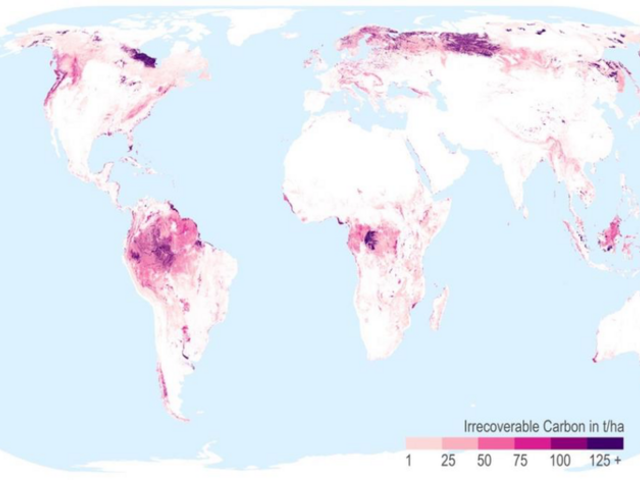
New study: World map of the most important protected areas to avert a climate catastrophe
11/18/2021 · PIKNew research from Conservation International maps the places on Earth that humanity must protect to avoid a climate catastrophe. These ecosystems contain what researchers call “irrecoverable carbon,” dense stores of carbon that, if released due to human activity, could not be recovered in time for the world to prevent the most dangerous impacts of climate change. The special protection of these crucial areas has another advantage: they are also havens of biodiversity. Thus, the targeted protection of these irretrievable carbon reservoirs can simultaneously make a significant contribution to species conservation.
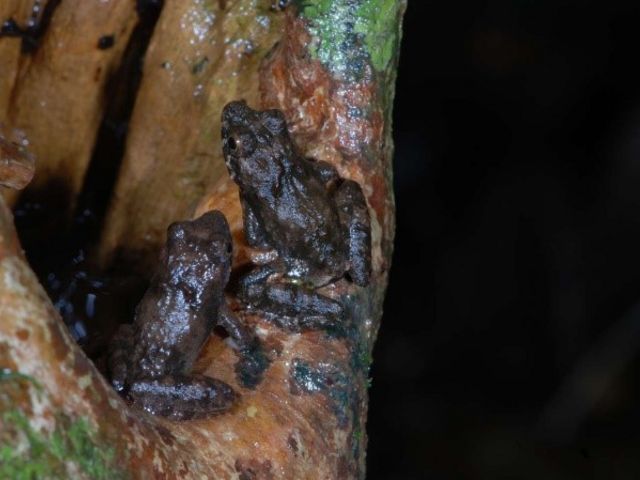
Sensitive Frogs: The Rainforest Heals More Slowly Than Previously Assumed
10/13/2021 · SGN and MfNScientists from two Leibniz institutions, the Senckenberg Natural History Collections in Dresden and the Museum of Natural History in Berlin, completed a long-term study of biodiversity in the rainforest over a period of more than twenty years. Using frog communities in the Ivory Coast region of West Africa as an example, the team was able to show that the ecosystem has still not recovered almost 50 years after deforestation.